
 Dams & Hydro
 Geotech
 Advanced Numerical Analysis
Geotech




Ramming into action

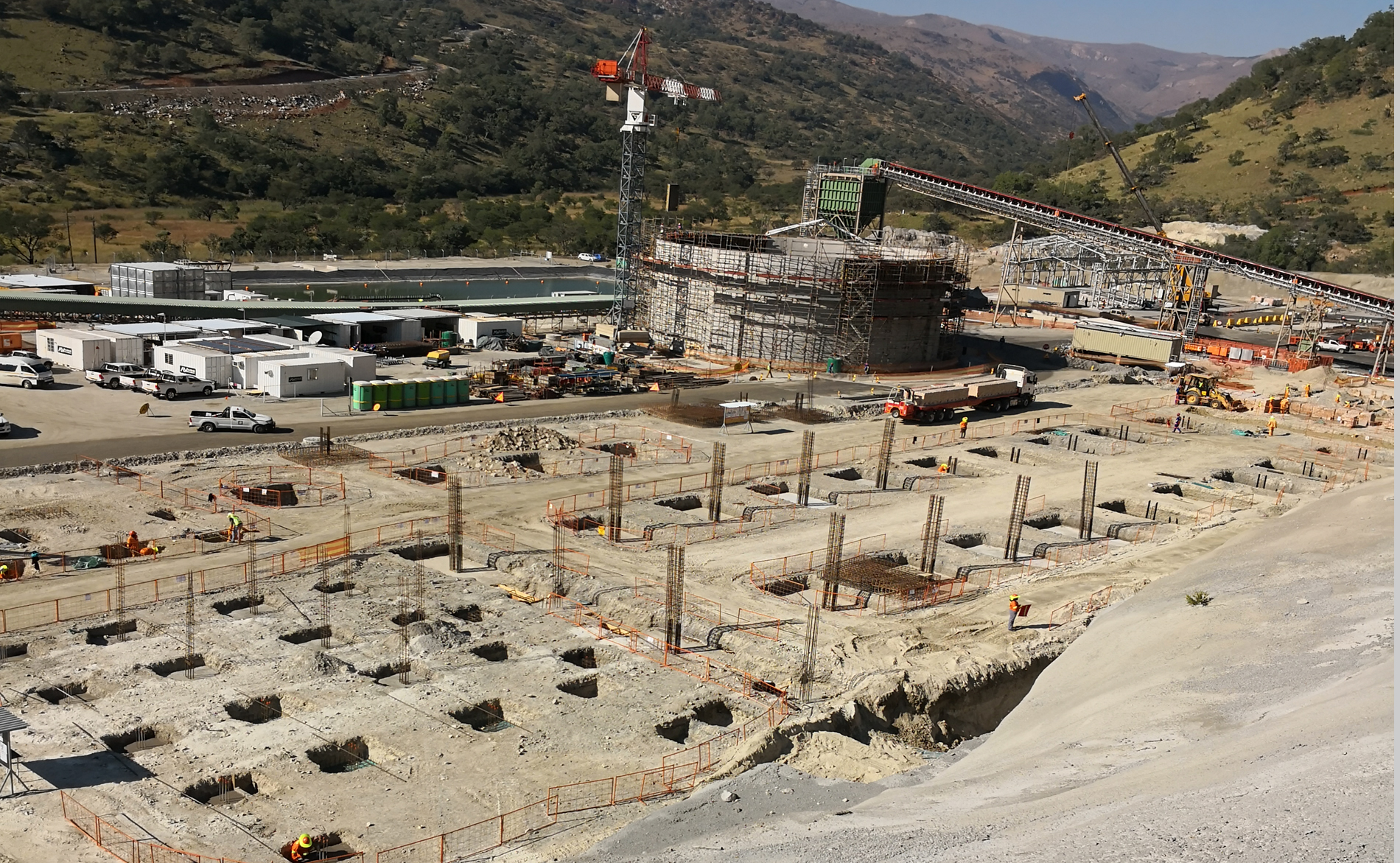
With the ever-increasing demand for coal due to the construction of new Eskom coal fired power stations, Total Coal South Africa have expanded their Dorsfontein operation to mine other seams of coal in the area. This expansion included the construction of a new 30m high coal stockpile which comprises a Reinforced Earth basin to house the stockpile with a tunnel running underneath it. The tunnel is used to transport the coal from the stockpile via a conveyor belt system. Due to the type of equipment being installed in the tunnel, it was imperative that the total and differential settlements were minimised.
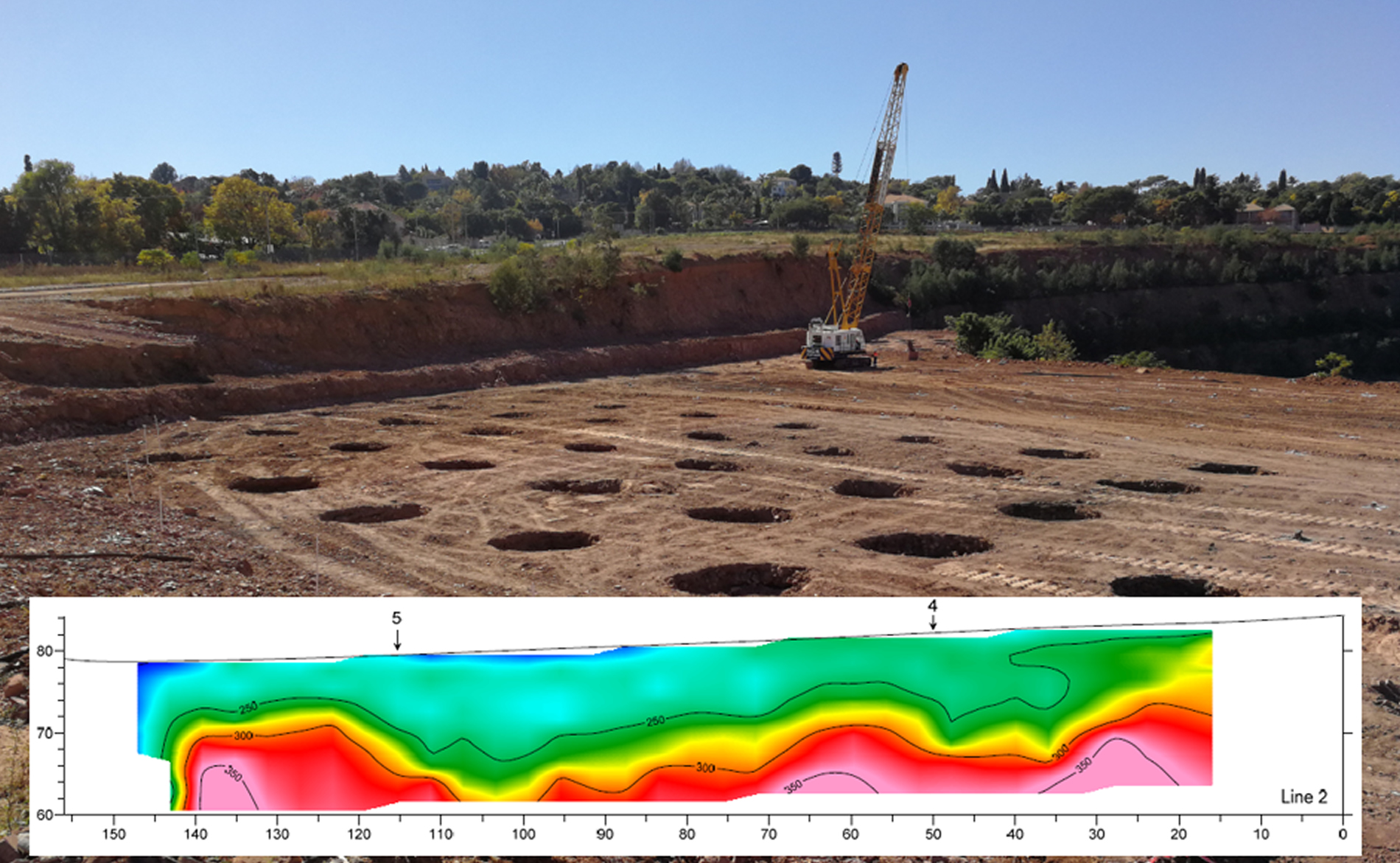
The field investigation comprised Dynamic Probe Super Heavy and Continuous Surface Wave tests and test pitting. Laboratory testing of disturbed and undisturbed samples was carried out to identify the properties of the in situ material. The results obtained revealed this material to be of very poor quality. The situation was exacerbated by the presence of a shallow ground water table. Measures were thus required to minimise the settlement.
A brainstorming session was held with the consulting engineer to Dorsfontein (Alan Robinson) and ARQ’s Mark Laughton and Alan Parrock to identify the most cost-effective solution to the problem. Following much deliberation it was established that the installation of stone columns in conjunction with a high strength geosynthetic would act as a “piled raft” below the tunnel minimising settlement.
The stone columns are installed by placing 1m³ of very hard rock (UCS>100MPa) and ramming it into the ground to a depth of approximately 1m using a Rapid Impact Compaction rig. This rig drops a 12 ton weight through a height of 1.5m at a rate of 45 blows per minute. Once the rig has reached a depth of 1m, the depression is filled with rock and the process repeated until the column reaches a depth of between 5 and 6m. Following the installation of the stone columns in a grid-like pattern, a high strength geosynthetic is placed over the area and spans between the columns. The stone columns form the “piles” and the geosynthetic with a 300mm layer of G6 material placed above it forms the “raft”. The figures below show the position of the stone columns.