
 Dams & Hydro
 Geotech
 Advanced Numerical Analysis
Geotech






TASEZ Development Phase 1 and 1A
Watloo, Pretoria, South Africa

ARQ Geotech’s involvement with the momentous Tshwane Automotive Special Economic Zone (TASEZ) commenced in 2019.
The multibillion-rand Tshwane Automotive Special Economic Zone is a collaborative project of the Gauteng Province, City of Tshwane and the Department of Trade, Industry and Competition’s (DTIC’s) SEZ.
The TASEZ is punted as Africa’s first ‘Automotive City’. Nissan, BMW and Ford will all assemble vehicles in Tshwane, with the area also hosting several truck and component manufacturers. The R3.5-billion SEZ, funded by government, will be housed next door to the Ford Motor Company of Southern Africa plant, in Silverton. The 162ha project will be developed in phases.
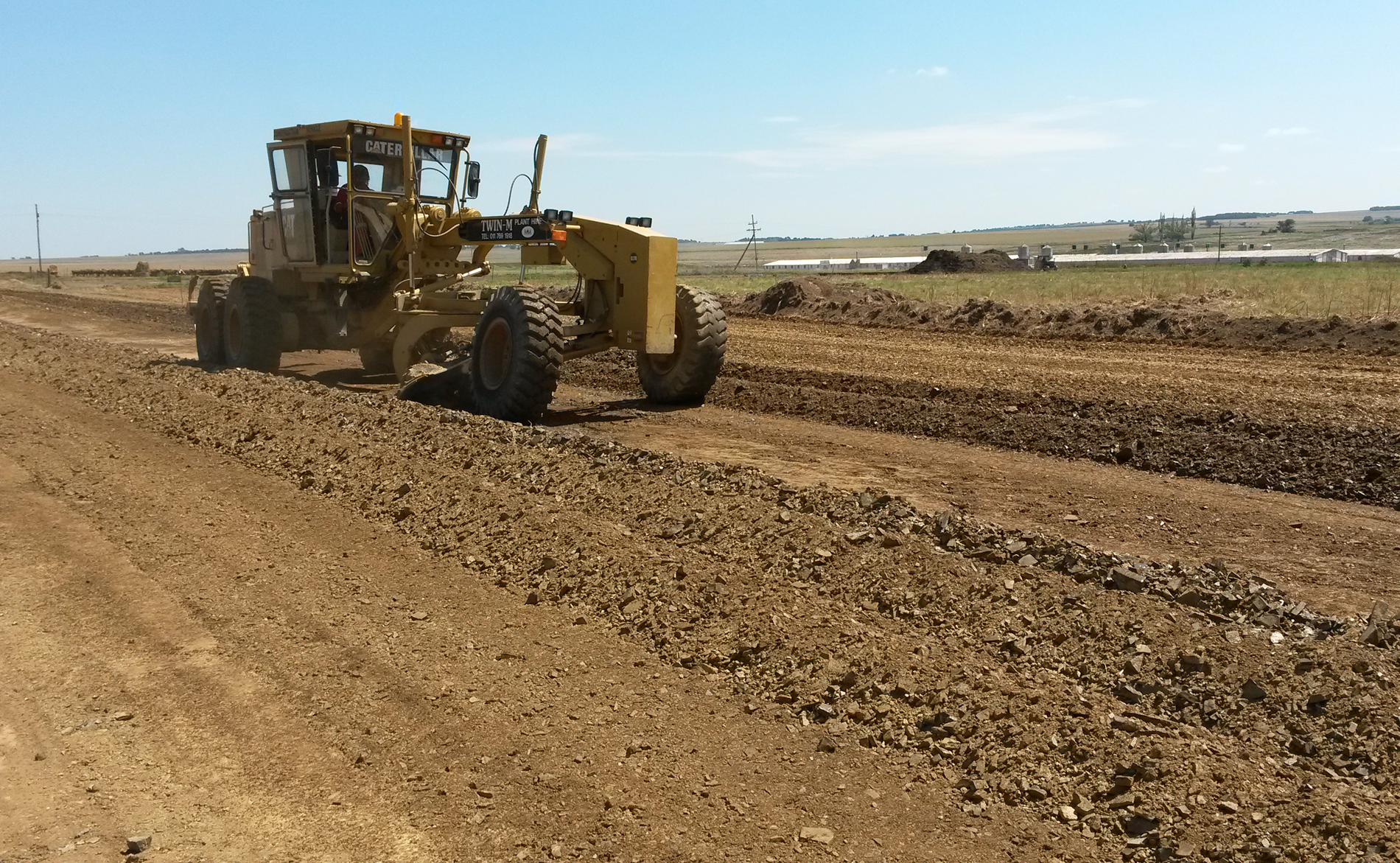
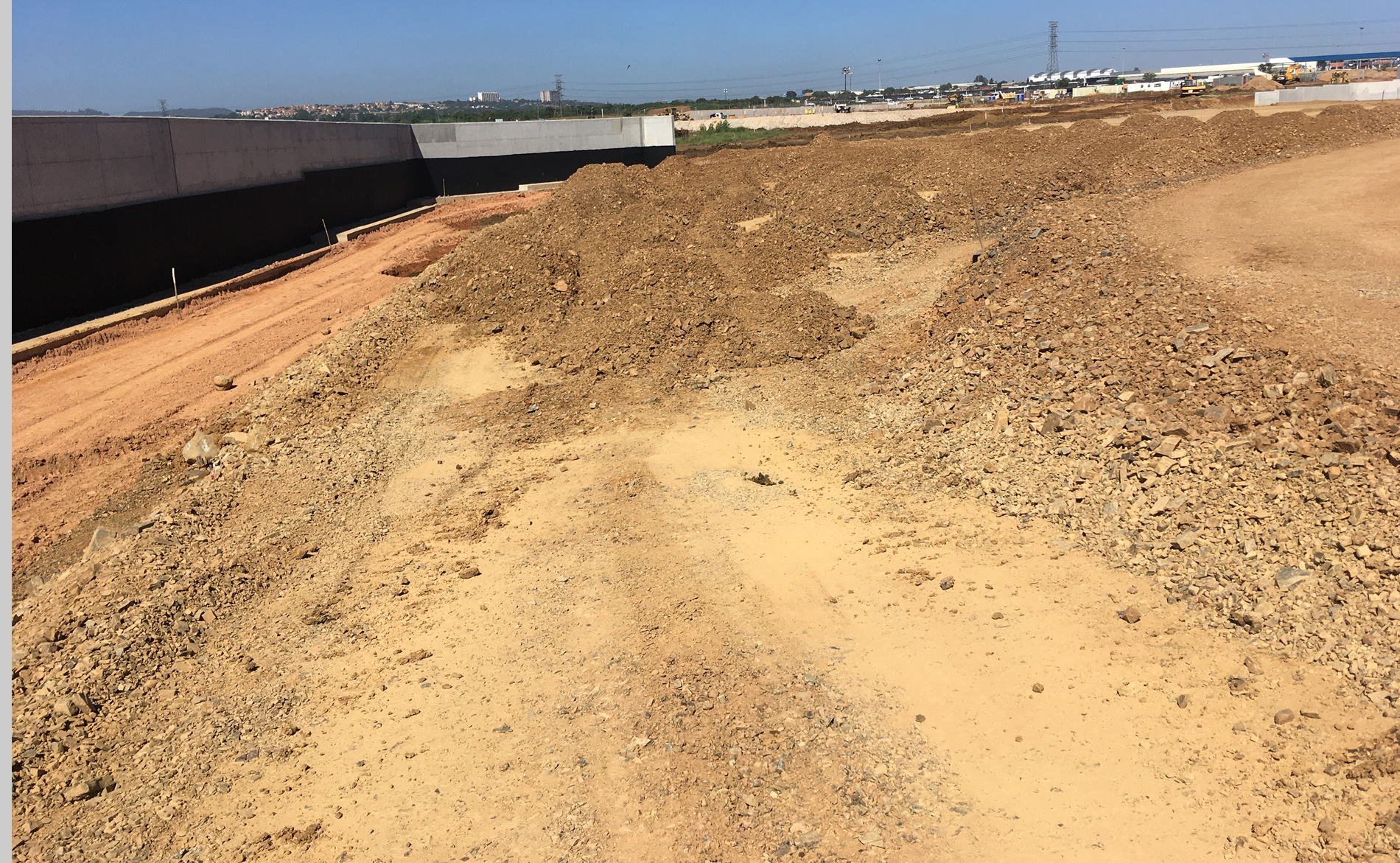
The project demands large terraced platforms to house warehouses, industrial plants and other infrastructure. This triggered huge earthworks operations. ARQ Geotech performed the initial site investigation in 2019. This comprised the excavation, profiling and sampling of 50 test pits and undertaking 9 Dynamic Probe Super Heavy (DPSH) tests. Initial recommendations were produced and covered foundation recommendations for typical structures, excavation conditions and material use. Prior to the onset of, and during the large-scale earthwork’s operation in 2020, ARQ was involved in various additional geotechnical investigations, material-use assessments and foundation recommendations as geotechnical sub-consultants to Zutari, Nako Illiso, Trencon and Ndodana Consulting Engineers.
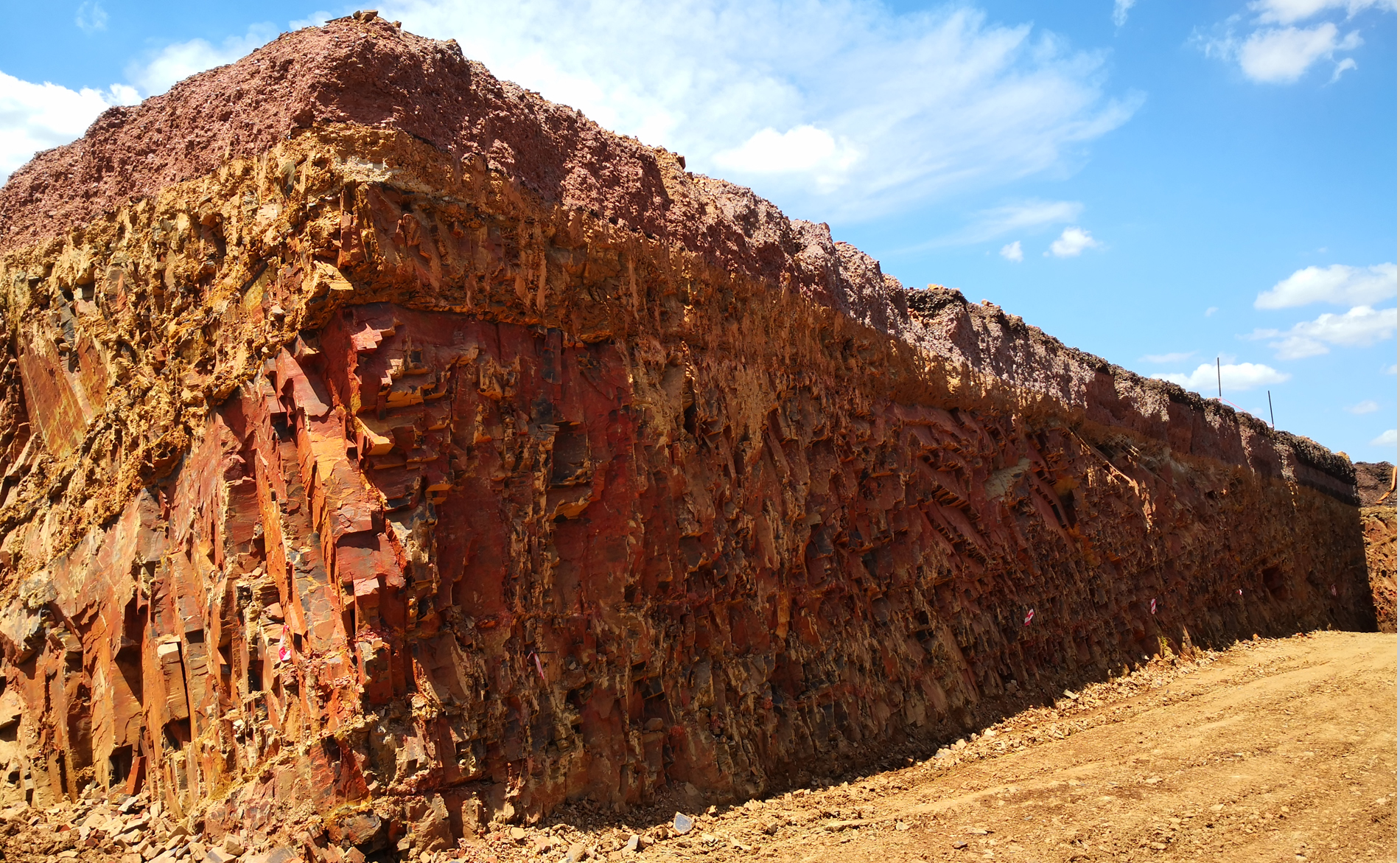
The site is underlain by Shale of the Silverton Formation, Pretoria Group, and intruded in several zones by Diabase (dolerite) of the Vaalian to post Mongolian Era. The stie specific geology is complex with numerous diabase intrusions into the Silverton Shale resulting in highly variable geological conditions in different areas of the site. Abundant shallow perched groundwater occurring, generally in the northern part of the site was encountered. Various temporary and permanent groundwater drainage solutions were proposed to facilitate construction and protect the structures.
ARQ Geotech performed various foundation assessments, slope stability assessments and undertook various geotechnical functions for several of the facilities forming the larger development. Of specific interest though was the material use aspect which is elaborated upon below.
A substantial saving would be observed if the earthworks could proceed employing a “cut to fill” methodology as opposed to constructing fill platforms with imported material from commercial sources. However, sedimentary rocks such as shales and mudstones are known to exhibit rapid weathering properties when disturbed and exposed to the atmosphere, and are also know to exhibit creep strain behaviour when placed in fills or embankments.
It was therefore necessary for ARQ to conduct testing specifically intended to provide additional insight into these properties and in conjunction with the Client to produce a risk adjusted approach whereby the use of shale as fill was permitted in specific areas and under specific conditions. This allowed a cost-saving without undue increase in risk. ARQ supplied a dedicated engineering geologist to the site to monitor material quality in cut areas and to supervise placement and compaction in fill areas.
Conditions governing the use of shale material as fill included:
- Shales were not to be used near the perimeter of the fill behind retaining structures where long-term creep may cause post construction relaxation and deflection of reinforced concrete retaining walls,
- Shales were not to be placed in thicknesses exceeding a specified cut-off thickness such that total creep accumulating to surface would not exceed tolerable limits,
- Shale placement and compaction was to occur rapidly after cut operation to minimise weathering and degradation. Furthermore, shale fill layer thickness and compactive effort was determined and specified to minimise breakdown of shale rock fragments during placement and compaction.
Through careful investigation and understanding of material behaviour a saving in earthworks costs was realised by allowing the use of otherwise potentially problematic material in the fill platform.
Project details
| DURATION | March 2020 - March 2021 |