
 Dams & Hydro
 Geotech
 Advanced Numerical Analysis
Geotech
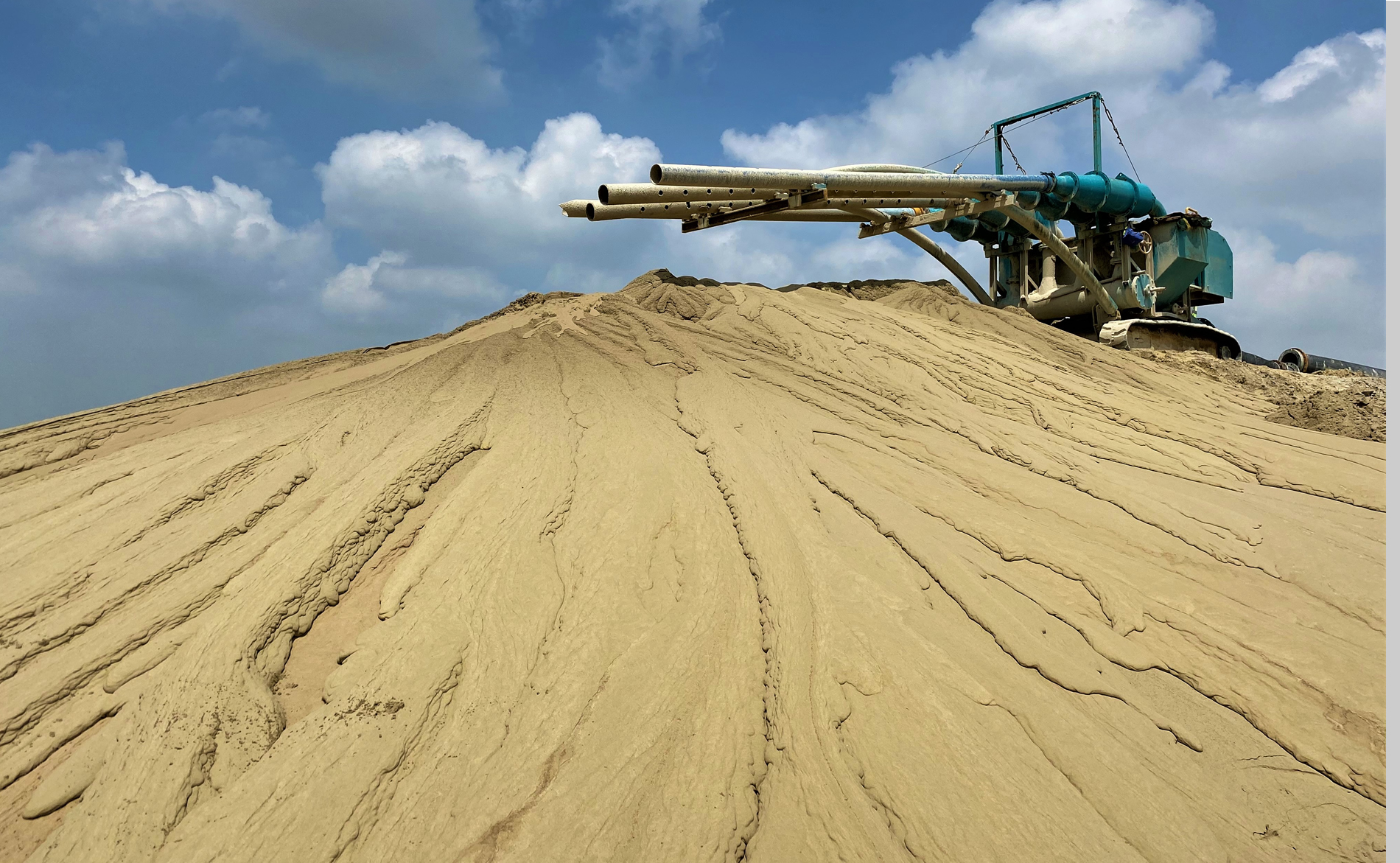

Brakpan Tailings Storage Facility Stability Review
South Africa

The Brakpan Tailings Storage Facility (TSF) has been operational since 1985, with a footprint of 800Ha, perimeter of 11km and maximum height of about 100m, it holds approximately 496 million cubic metres of tailings material. An investigation into the Brakpan TSF was conducted by a team of professionals aiming to investigate and validate various stability aspects, not only for Brakpan TSF itself, but upstream cyclone facilities in South Africa in general. The evaluation involved a site investigation comprising insitu testing including CPTu, seismic cone and pressuremeter testing. Samples were collected during this investigation and submitted for laboratory testing, which included conventional triaxial testing as well as critical state triaxial testing. All available information, including current and historic aerial surveys, piezometric data, findings of previous and the current geotechnical investigations, was interrogated to simulate conditions of the facility as accurately as possible. In addition to this, a probabilistic seismic hazard assessment was conducted and used to develop representative time history events for analysis.
A stability assessment was conducted in 2D and 3D, utilising Limit Equilibrium and Finite Element software packages. The commonly used Mohr Coulomb material model as well as the more complex critical state NorSand constitutive model were utilised to assess the stability of the facility and potential for liquefaction. For the latter, various triggering methods were considered, including the effects of seismic occurrences. For this, 3D models of the facility were submitted to dynamic seismic loading and stresses, strains and displacements assess throughout the event.
ARQ Geotech was responsible for supervision and monitoring of the geotechnical investigation, interpretation of insitu and laboratory test results and derivation of geotechnical profiles and material parameters for analysis.
With this completed, ARQ conducted Limit Equilibrium, 2D and 3D Finite Element modelling and analysis to examine the stability of the facility under predefined Mohr Coulomb strength conditions, as well as by employing the NorSand constitutive model. Staged construction simulation of the facility allowed for stresses to be ‘built in’ to the models and the potential for static liquefaction assessed. Furthermore, dynamic analyses were conducted to simulate seismic time histories, allow to assessment of potential to cyclic liquefaction.
Project details
| DURATION | April 2020 - March 2021 |