


 Dams & Hydro
 Geotech
 Advanced Numerical Analysis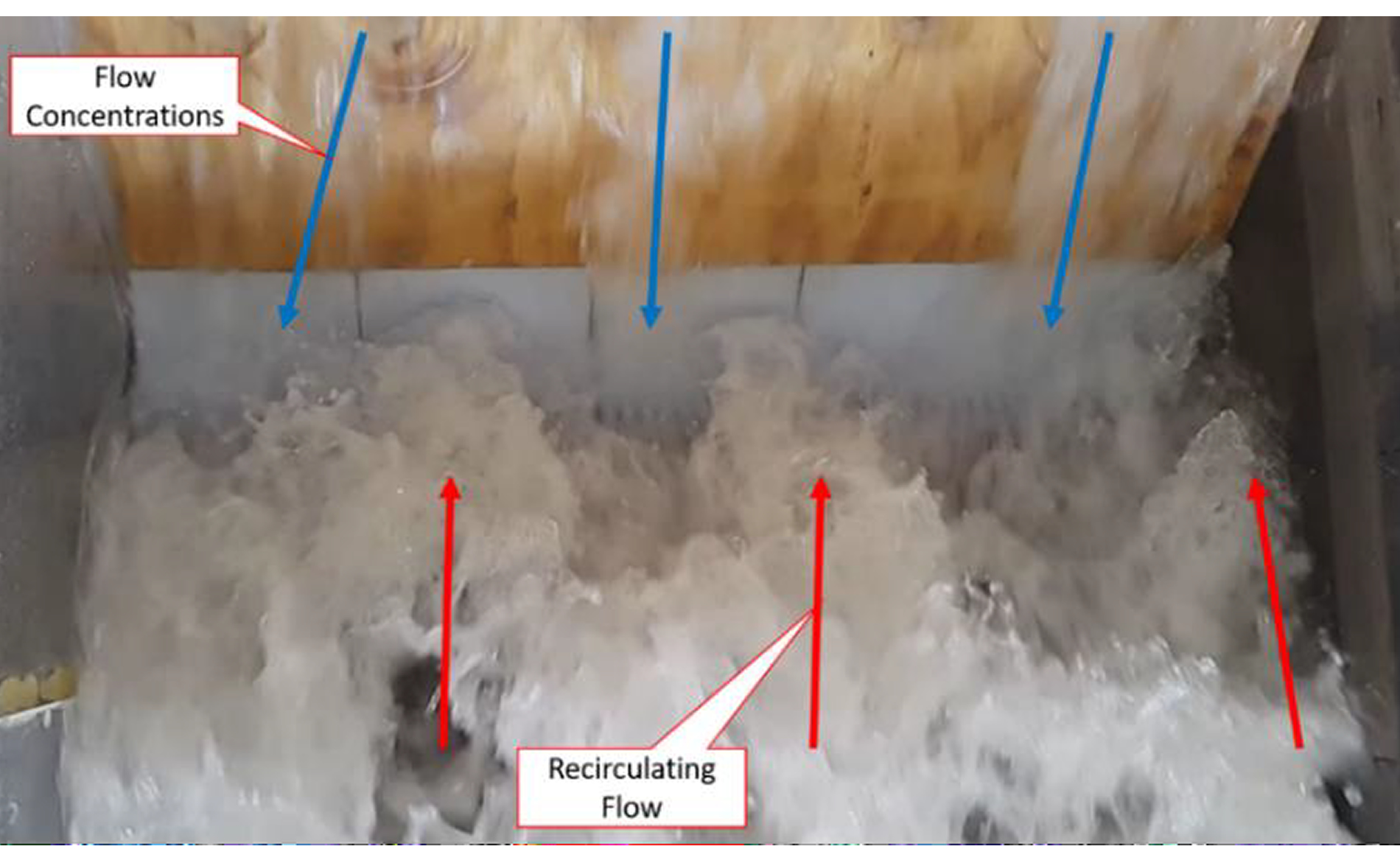
SANCOLD Conference 2017: Spillway Modification Requires Amended Energy Dissipation at the Toe of a Dam
Download Publication (PDF)By A Roos, D Cameron-Ellis, HJ Wright, ARQ Consulting Engineers (Ltd) Pty. Dams and Hydro, Pretoria, South Africa.
Discharge over an ogee crested gravity dam ultimately flows as a uniform sheet at the toe of the dam from where a stilling basin, roller bucket of similar energy dissipation structure serves to manage residual energy and safely return the flow to the river. However, when an ogee is replaced with a labyrinth or PK weir during a raising, the flow regime at the toe of the dam is changed significantly. Conventional energy dissipation systems may be inadequate to manage this flow, especially when concentrated jets impact beyond the toe of the dam. In this paper, the authors discuss the physical model study investigations undertaken for the raising of Tzaneen Dam, with specific reference to the energy dissipation requirements associated with the changed crest configuration, and provide some insight into the robustness of conventional slotted roller bucket energy dissipators.
Return