


 Dams & Hydro
 Geotech
 Advanced Numerical Analysis
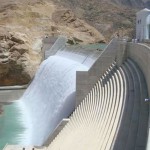
Energy dissipation by dam crest splitters by Paul Roberts and Michelle Blaeser
There are many examples from dams around the world where a need has resulted in a technical innovation. The Roberts’ splitters are one of these examples from South Africa. When floodwaters are passed over a dam, care is needed to ensure that the energy of the flow is dissipated in a safe and controlled manner. Failure to do this can result in extensive and uncontrolled erosion of the riverbed downstream of the spillway. The conventional methods of dissipating energy when floodwaters pass over dams are either:
- Conveying the water to the toe of the dam and dissipating energy by means of hydraulic jump or roller, or
- Allowing the water to fall freely (applicable generally to arch dams) and to dissipate energy in a deep plunge pool.
Both of these methods can be expensive to construct, and recent research has indicated that serious problems are common with the operation of stilling basins where the head-water drop from reservoir to tailwater is more than 50 m.
Download Publication (PDF)Return