


 Dams & Hydro
 Geotech
 Advanced Numerical Analysis
Advanced Numerical Analysis

Advanced Numerical Analysis
ARQ’s ability to innovate in design and to solve complex engineering problems has been repeatedly demonstrated on many highly challenging projects. A key element in this core capability is a facility to simulate and analyse almost any condition and situation and in this regard, the company’s primary tool has always been finite element (FE) modelling.
To make use of this capability beyond the specialist services in dams, geotechnics and structures, the company has decided to expand its service offering through the establishment of an Advanced Numerical Analysis division. Supported by specialist engineers with an extensive history in translating innovative ideas into practical implementation, ARQ’s specialist FE modellers and analysts are equipped with a rare ability to apply the highest level of numerical analysis and structural mechanics to develop optimal solutions in the real world.
ARQ’s abilities in FE analysis include the full range of linear static, nonlinear static, quasi-static, spectral, linear dynamic and nonlinear dynamic analysis.
ARQ is a dedicated member of NAFEMS, which is an internationally recognized body for ensuring competence and quality in the field of numerical analysis. Through subscription to the NAFEMS systems, we are able to ensure the highest possible work quality for our clients.
Click here to view the ARQ Advanced Numerical Analysis Profile document.
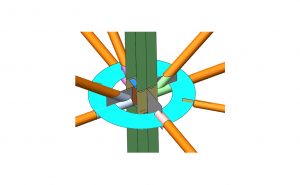
Forensic Structural Assessment
In many cases structural failures cannot merely be assessed using qualitative means. Where required, quantitative methods such as the Finite Element method are used to accurately capture the postulated failure mechanism. Using on-site investigations and advanced analysis techniques ARQ can carry out forensic analysis of steel and reinforced concrete structures to quantitatively establish failure mechanisms of a given structural system.
Read more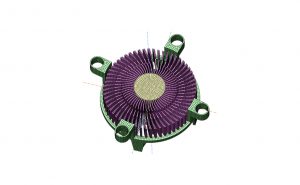
Fatigue Analysis
Periodic loading, typically of a cyclic nature, can cause fatigue failure in many structural systems. This is a common and serious problem in industrial structural systems. We are able to design new or evaluate the fatigue lifecycle of existing configurations. We can therefore optimise systems to reduce or eliminate effects of fatigue.
Read more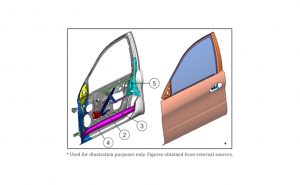
Structural Dynamics: Short Duration Transient Analysis
Short duration transient analysis can be undertaken to determine the structural response of various systems to impulse dynamic loading. Examples of this could be blast loading, crash impacts or drop tests. We consider all required variables which include but are not limited to inertial conditions, nonlinear geometry, nonlinear material models using explicit solvers.
Read more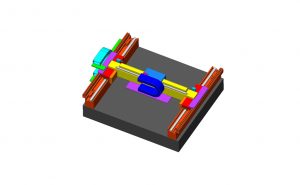
Structural Dynamics: Vibration Analysis
Vibration analysis can be undertaken to identify the cause of unwanted dynamic effects on structures or machinery. Vibrations may be due to human or mechanical loading. An example of human vibration may be resonance on a foot bridge, while an example of mechanical vibration may be resonance of a structure caused by a supported machines’ operating frequency. Following the identification of the source, economic solutions are formulated to avoid/remedy these problems.
Read more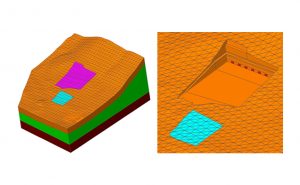
Advanced Geotechnical Analysis
Where 2D plane strain and standard finite element analysis cannot fully capture the complex behaviour of a given stress state of soil/rock system, 3D finite element analysis can be more effectively used. Soil / rock strata are never uniform throughout a specific terrain and many geotechnical structures (piles foundations, non-uniform slopes, tunnels, foundation/basement excavations etc.) cannot be accurately modelled under plane strain conditions.
Read more